
Exoskeleton Wandercraft – A Revolution in Rehabilitation and Industrial Robotics
The Wandercraft Exoskeleton is Changing Patients’ Lives and Shaping the Future of Automation
Technology That Helps People Stand and Walk
Modern Features Supporting a Natural Gait
Presentation During the Olympic Flame Relay
Personal Exoskeleton – A Step Towards Everyday Mobility
Wandercraft and Renault Join Forces
From Medical to Industrial Robotics
Calvin – The Humanoid Robot of the Future
The Future of Mobility Starts Today
The Wandercraft Exoskeleton is Changing Patients' Lives and Shaping the Future of Automation
The Wandercraft exoskeleton is an innovation making bold strides in both rehabilitation and industrial robotics. With advanced technology and close cooperation with the automotive sector, the French company Wandercraft is becoming one of the leaders in mobile solutions that support human movement. Key products like the Atalante X and Personal Exoskeleton provide real support to people with limited mobility as well as to industrial workers.
Technology That Helps People Stand and Walk
Founded in 2012 by Nicolas Simon, Matthieu Masselin, and Jean-Louis Constanza, Wandercraft was born out of a heartfelt need. The founders were inspired by personal experiences with Charcot-Marie-Tooth disease, which impairs mobility. From the beginning, the company’s mission has been to restore walking ability to people with serious movement disorders.
The result of their efforts is the Atalante X exoskeleton — a medical device that debuted in 2019. It enables patients to stand, walk, and learn natural movement patterns from the very first rehabilitation session. Today, nearly 100 rehabilitation and clinical research centers around the world use it.
Modern Features Supporting a Natural Gait
The Atalante X exoskeleton stands out with its unique technical features. It offers 12 degrees of freedom in the hips, knees, and ankles, allowing for exceptionally smooth and natural walking. Thanks to the ActiveBalance mode, users can walk without crutches, increasing comfort and training efficiency.
The benefits of using Atalante X are felt by both patients and therapists. For users, it means early rehabilitation, free hands, a high step count, and multi-directional movement. For specialists – fast session setup, adjustable intensity, and no need for manual support.
The device has received FDA clearance for use by patients with spinal cord injuries from T5 to L5 and post-stroke. In Europe, it carries the CE mark, confirming compliance with medical standards.
Presentation During the Olympic Flame Relay
Wandercraft’s technology has gained widespread recognition beyond the medical community. Last year, the company demonstrated the capabilities of the Atalante X exoskeleton during a unique event. A paralyzed athlete took part in the Olympic flame relay, walking with the help of the device. The moment became a symbolic showcase of the power of innovation and the hope brought by modern technologies.
Personal Exoskeleton – A Step Towards Everyday Mobility
Building on the success of the Atalante X, Wandercraft unveiled a new prototype in late 2023 – the Personal Exoskeleton. This device is designed for everyday use, both at home and in public spaces. It entered the clinical research phase in February 2025.
The new system also offers 12 degrees of freedom in the lower limbs and dynamic gait control. Notably, it functions without the use of hands, allowing complete freedom of movement. The Personal Exoskeleton is currently in the final stages of research and development. Before it hits the market, it will undergo clinical trials and regulatory evaluation.
Wandercraft and Renault Join Forces
In 2025, Wandercraft announced a strategic partnership with the Renault Group. The French automotive giant invested as a minority shareholder, joining existing investors and new partners.
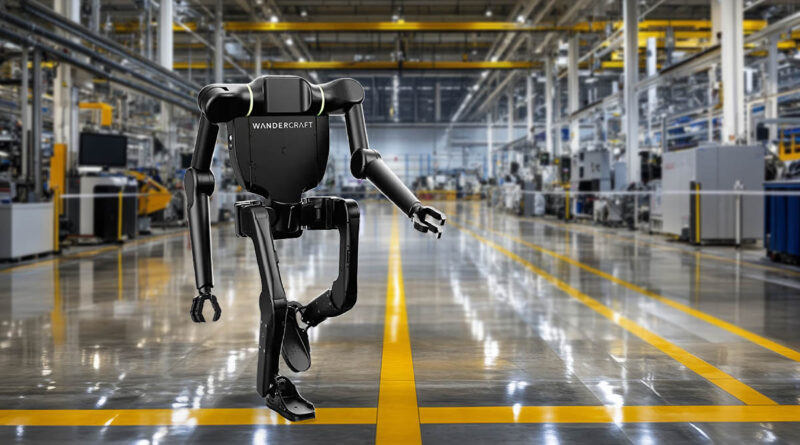
As part of this collaboration, Wandercraft presented its first humanoid robot, named Calvin. The robot was developed in just 40 days using technologies previously developed for exoskeleton projects.
The goal of the partnership is to develop a new generation of robots, primarily for industrial use. Calvin is designed to support factory workers by taking over non-ergonomic and physically demanding tasks, while also reducing production times and increasing efficiency.
From Medical to Industrial Robotics
In the future, Renault also plans to support Wandercraft at the commercialization stage. Thanks to its experience in cost-reduction design and production scaling, the automotive industry can greatly accelerate the rollout of both robots and exoskeletons to the broader market.
“Renault Group’s investment is a breakthrough moment for Wandercraft,” emphasizes Matthieu Masselin, co-founder and CEO. “Thanks to this collaboration, we can build scalable, low-cost solutions that have a real impact on people’s daily lives – whether by helping individuals with disabilities or supporting industrial workers.”
Calvin – The Humanoid Robot of the Future
Although the new robot Calvin lacks grasping abilities, it can autonomously transport objects. In the shared video footage, it is seen placing a container on a shelf. While the company has not yet revealed detailed technical specifications, it’s clear that Calvin represents another step toward a robotic industrial future.
The Future of Mobility Starts Today
The Wandercraft exoskeleton is not only an innovative rehabilitation tool. It also represents the potential of technology to truly transform lives — both in clinics and on production floors. The partnership with Renault gives Wandercraft access to vast industrial and technological resources, paving the way for further projects. Thanks to products like the Atalante X and Personal Exoskeleton, Wandercraft is solidifying its position as a pioneer in mobile robotics and assistive medical technologies.