The Effects of Psilocin on Aging
The Effects of Psilocin on Aging – A Breakthrough in the Fight Against Aging
What is Psilocin?
What Cellular Studies Have Shown?
What Mouse Studies Have Shown?
Mechanisms of Action and Scientific Significance
Limitations and Future Research Directions
The effect of psilocin on aging – a breakthrough in the fight against aging
The effects of psilocin on aging are attracting increasing interest in the scientific community. This compound, an active metabolite of psilocybin—a substance found in so-called “magic mushrooms”—has demonstrated exceptional properties in slowing the aging process. Recent studies have shown that psilocin extends the lifespan of human skin and lung cells by up to 57%. It reduces oxidative stress, enhances DNA repair mechanisms, and protects telomeres.
Furthermore, experiments on mice indicate that the substance may actually extend lifespan—by up to 30%. While these data are extremely promising, scientists emphasize the need for further, large-scale clinical trials before psilocin is considered for medical use.
What is psilocin
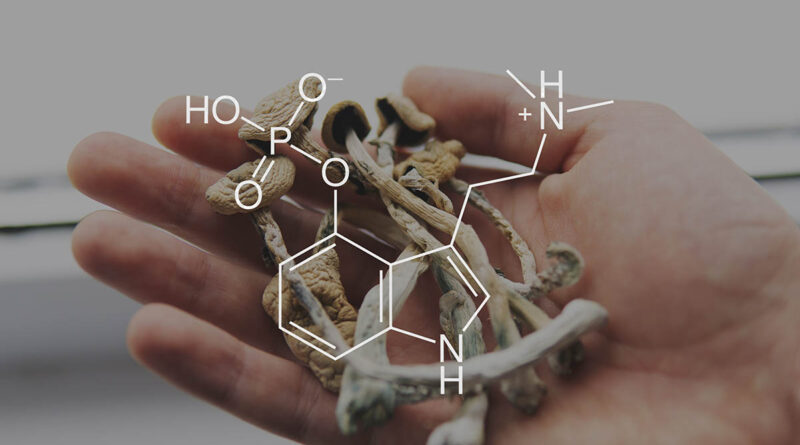
Psilocin is an organic chemical compound from the tryptamine group that plays a key role in the effects of so-called “magic mushrooms.” These are mushrooms containing psychoactive substances—primarily psilocybin and psilocin itself. The most well-known species is Psilocybe cubensis, but over 180 species with similar compositions occur naturally. After consuming psilocybin, the body converts it into active psilocin, which affects serotonin receptors, primarily 5-HT2A. This leads to characteristic perceptual, emotional, and cognitive changes.
Although magic mushrooms are primarily associated with psychedelic experiences, modern science sees much greater potential in their components. Psilocin acts not only on the brain but—as recent research shows—also at the cellular level. It influences the aging process, protects telomeres, reduces oxidative stress, and improves DNA repair. Therefore, it is currently the subject of intensive research in the context of anti-aging therapies and cellular health protection.
What the cell studies showed
The research team analyzed the effects of psilocin on human skin and lung cells. They found that the substance significantly delayed the aging process. Depending on the dose, the cells lived 29% to 57% longer compared to the control group. Furthermore, they showed fewer typical markers of aging, such as the p16 and p21 proteins. Instead, indicators of healthy cell division, such as PCNA and pRB, predominated.
Simultaneously, the researchers observed a significant reduction in oxidative stress. Psilocin increased the expression of the Nrf2 protein and reduced the presence of Nox4, an enzyme responsible for free radical production. Improvements were also observed in DNA integrity and telomere maintenance, which are crucial for healthy cellular aging.
What the mouse studies showed
To test psilocybin’s effects on the entire body, studies were conducted on elderly mice. Animals receiving monthly doses of psilocybin for ten months showed significantly higher survival rates—as much as 80% compared to 50% in the control group.
Interestingly, the compound’s effects weren’t limited to lifespan. Mice treated with psilocybin had thicker fur, fewer gray hairs, and even hair regeneration. These results suggest that the substance not only extends lifespan but may also improve its quality in old age.
Mechanisms of action and scientific significance
Psilocin works in multiple ways. Primarily, it protects telomeres – the terminal structures of chromosomes that shorten with age. When they are too short, cells lose their ability to divide and enter a state of senescence. Psilocin slows this process, allowing cells to remain active for longer.
Additionally, this compound strengthens defense mechanisms against oxidative stress and supports the repair of damaged DNA. It increases levels of SIRT1 – an enzyme associated with longevity and cellular metabolism. These effects indicate that psilocybin may act as a so-called geroprotector, a substance that delays the biological aging of the body.
The so-called “telomere hypothesis of psilocybin” is also generating interest, according to which this substance supports cell health by directly affecting the structure and length of telomeres. This theory is gaining importance in the context of aging and lifestyle diseases.
Limitations and Future Research Directions
Although the results are impressive, researchers remain cautious. Current data come primarily from in vitro and animal studies. It is not yet known whether similar effects will occur in humans. Dosage, long-term safety, and potential side effects remain to be thoroughly investigated.
Future studies should focus on different age groups, analyze the body’s response over time, and precisely determine the molecular mechanisms responsible for the observed effects. Clinical trials in humans will also be crucial.