
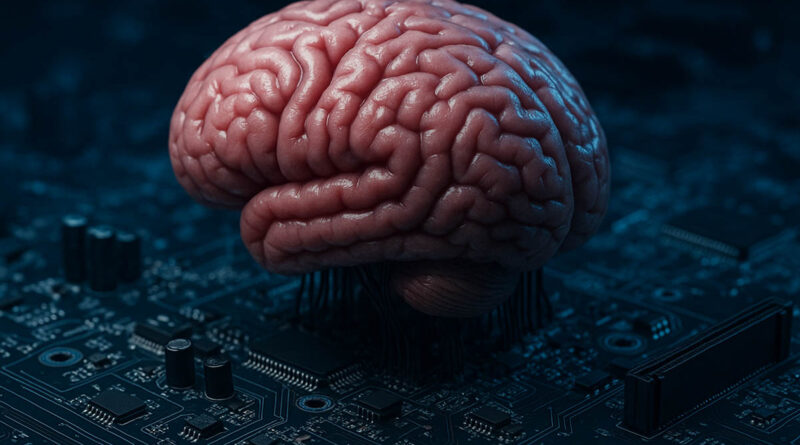
Cortical Labs CL1 Biological Computer: The Dawn of a New Era of Technology
Cortical Labs CL1 Biological Computer Changes the Way We Think About Technology
How the CL1 Biological Computer Works
Brain-Inspired Technology
Applications in Research and Medicine
Ethical Challenges and Questions about Consciousness
Biological Computer and Artificial Intelligence
Potential and Limitations
A Revolution Just Beginning
A New Definition intelligence
Cortical Labs CL1 Biological Computer Changes the Way We Think About Technology
In Australia, Cortical Labs has launched the CL1 biological computer, which combines neurons cultured from human stem cells with classical electronics. It’s the first commercial system of its kind, available to laboratories and research companies worldwide. The device opens a new chapter in the history of computer science and biology, while also raising questions about the ethics and limits of human interference with nature.
How the CL1 biological computer works
The Cortical Labs CL1 biological computer is a hybrid of living neurons and silicon integrated circuits. Scientists grow human neurons from stem cells and then place them on a chip with hundreds of microscopic electrodes. These electrodes read electrical signals from the cells and can stimulate them, creating a two-way communication between biology and technology.
Neurons respond to stimuli, learn, and change their synaptic connections. In this way, they create a dynamic system that resembles the basic learning processes in the human brain. While CL1 cannot replace a traditional computer, it can solve simple tasks and adapt to changes. In practice, this means the device can “learn” in real time without the need for traditional programming.
Brain-Inspired Technology
Cortical Labs calls its solution “synthetic biological intelligence.” The system utilizes approximately 800,000 human neurons, which live in a special medium and are constantly monitored. Thanks to its unique design, the CL1 operates with very low energy consumption compared to conventional computer systems.
Traditional data centers consume hundreds of megawatts of energy, while a biological computer can perform complex calculations with a fraction of that power. This is due to the extraordinary efficiency of biological neural networks. By comparison, the human brain consumes only about 20 watts of energy, and its data processing capacity still exceeds the capabilities of the largest supercomputers.
Applications in research and medicine
The first CL1 units have been delivered to research laboratories and scientific institutes. The device is primarily used to test new therapies, model brain diseases, and study learning processes. By combining biology and electronics, scientists can observe how neural networks respond to stimuli and drugs in real time.
Cortical Labs’ technology could ultimately help develop more effective treatments for neurological diseases such as Alzheimer’s and epilepsy. The biological computer also offers hope for a better understanding of how the human brain functions and how its mechanisms can be replicated in artificial intelligence.
Ethical Challenges and Questions about Consciousness
Despite the admiration for the Australian scientists’ achievement, many experts emphasize that CL1 is still in a very early stage of development. The device’s neural network lacks the complex brain structure or sensory connections that would enable consciousness.
Researchers in the journal Organoid Intelligence point out that current brain organoids “do not possess sufficient complexity or organization to demonstrate intelligence or consciousness.” This means that CL1 does not “think” or “feel” in the human sense—it processes information at a biological level, but without subjective experience.
At the same time, ethical questions arise. Is cultivating human neurons for use in technology morally permissible? Could the line between life and machine be blurring? Scientific and journalistic articles emphasize that the development of such systems requires a new approach to bioethics and strict legal regulations.
Biological Computer and Artificial Intelligence
Many commentators see Cortical Labs’ biological computer as a bridge between classical artificial intelligence and biotechnology. Current AI models, such as neural networks in software, are inspired by biology but operate entirely digitally. CL1 goes a step further – combining real, living neurons with electronics.
In the future, such systems could form the foundation for a new kind of machine learning – based not on algorithms but on natural neural processes. What seems like an experiment today could become the beginning of a breakthrough in creating more “organic” forms of artificial intelligence. However, experts emphasize that before this happens, years of research and understanding of the fundamentals of biological networks are necessary.
Potential and Limitations
Cortical Labs sells the CL1 for around $35,000. Each unit can operate for several months before the neurons lose their properties. The system also requires appropriate laboratory conditions – a constant temperature, a nutrient solution, and air filtration. Therefore, it’s not an office computer or a mass-market device, but a research tool.
Despite its limitations, the CL1 demonstrates that the direction of biological technology is realistic. The possibility of integrating neurons with electronics opens new perspectives for science, but also forces us to reflect on how to define the concepts of intelligence and life in the context of machines.
The revolution that's just beginning
The Cortical Labs CL1 biological computer is just the beginning. In the coming years, we can expect the development of further versions of neural devices. Scientists predict that future models will utilize millions of cells and more complex networks, allowing for realistic simulations of cognitive processes.
At the same time, researchers caution against over-enthusiasm. While the CL1 inspires and shows the direction of development, its capabilities are currently limited. It is more of a laboratory for experiments than a fully-fledged next-generation computer. Before such systems become part of everyday life, science must answer many questions—both technological and ethical.
Redefining Intelligence
The development of biological computers poses a fundamental challenge for humanity: how to define intelligence and consciousness when they are no longer the exclusive domain of living organisms? CL1 is not yet conscious, but its existence demonstrates that the line between living and artificial is becoming increasingly thin.
Experts emphasize that instead of fearing this technology, we should understand it and develop it responsibly. If science maintains ethical standards and transparency, biological computers can help study the brain, treat diseases, and create more sustainable artificial intelligence.
Cortical Labs’ CL1 biological computer is a viable, scientifically validated project that combines biology and technology in a never-before-seen way. Although the device lacks consciousness, it demonstrates that neurons can collaborate with electronics, learning and adapting.
CL1 symbolizes the dawn of a new era in which the line between machine and life is beginning to blur. It is a step toward the future, but also a challenge that requires a wise approach, scientific integrity, and ethical reflection.
sources:
Douglas, T., Savulescu, J., et al. (2023). Playing brains: The ethical challenges posed by silicon and wetware. Neuroethics, 16(4). https://pmc.ncbi.nlm.nih.gov/articles/PMC10602981/
Farisco, M., & Evers, K. (2023). Ethical aspects of organoid intelligence: Between neuroscience and philosophy of mind. AJOB Neuroscience, 14(2), 120–133. https://doi.org/10.1080/21507740.2023.2179078
Green, J. D., et al. (2025). Assessing the utility of organoid intelligence: Scientific and conceptual concerns. Organoid Intelligence, 4(2), Article 9. https://www.mdpi.com/2674-1172/4/2/9
Hartung, T., Smirnova, L., & Pamies, D. (2023). Organoid intelligence (OI): The new frontier in biocomputing and intelligence-in-a-dish. Frontiers in Science, 1, Article 1017235. https://doi.org/10.3389/fsci.2023.1017235
Smirnova, L., Hartung, T., & Pamies, D. (2024). Advancing organoid intelligence: Scientific, ethical, and societal considerations. Trends in Neurosciences, 47(1), 15–27. https://doi.org/10.1016/j.tins.2023.08.005


