A constellation of supercomputers in space – a revolution in computing thanks to the Three-Body Computing Constellation project
A constellation of supercomputers in space – the dawn of a new technological era
An innovative approach to data processing
Edge computing in orbit
Sustainable technological development
International cooperation and project openness
The future of data processing – not only on Earth
Challenges and limitations
A constellation of supercomputers in space – the beginning of a new technological era
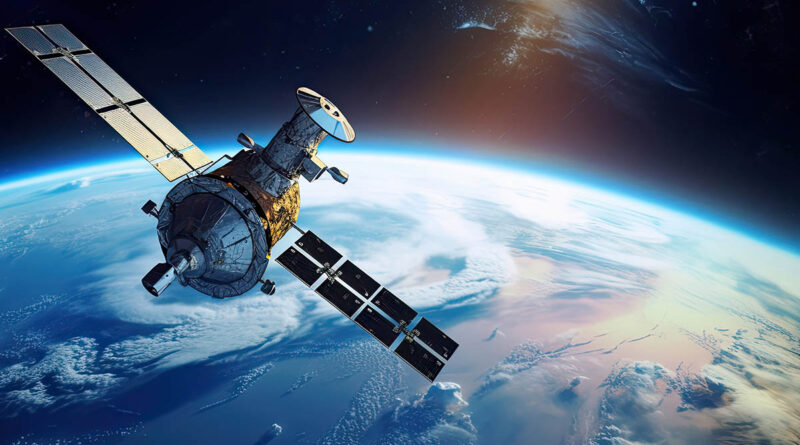
On May 14, 2025, the world of technology entered a new era. On that day, the Chinese company ADA Space, in collaboration with the Zhejiang Lab research laboratory, launched the first 12 computing satellites into orbit as part of a project called the “Three-Body Computing Constellation.” The name refers to the famous three-body problem in physics, symbolizing the complexity and potential of innovative computing solutions. This is the first step in building a space-based supercomputing network, which will ultimately consist of 2,800 satellites, collectively achieving a staggering 1,000 petaoperations per second.
Innovative approach to data processing
The space supercomputer constellation aims to transfer a portion of global computing power beyond Earth’s atmosphere. Each launched satellite is equipped with an artificial intelligence model with 8 billion parameters and the ability to process approximately 744 trillion operations per second (TOPS). The combined power of the first 12 units is 5 petaoperations and 30 terabytes of memory. Data is transmitted via laser links with a throughput of up to 100 gigabits per second. Unlike traditional data centers, which generate enormous amounts of heat and consume significant amounts of energy, space supercomputers utilize the natural vacuum of space. This environment allows for passive cooling of the equipment, eliminating the need for complex and energy-intensive air conditioning systems.
Edge computing in orbit
A key element of the “Three-Body Computing Constellation” project is edge computing, which involves processing data as close to its source as possible—in this case, in orbit itself. This significantly reduces the need to transmit massive amounts of raw data to Earth. Instead, information is analyzed and processed in space, and only the computational results are sent back to Earth. This solution not only saves bandwidth but also increases data security and speeds its availability. The ability to make decisions in real time—without the delays associated with communication between Earth and satellites—opens the door to numerous applications, particularly in the areas of climate monitoring, national security, and space exploration.
Technological Sustainability
The Chinese initiative is not only a display of technological prowess but also a well-thought-out strategy for developing sustainable forms of data processing. Traditional data centers, located around the world, consume enormous amounts of energy—estimated to account for approximately 1–2% of global electricity consumption. Placing computing infrastructure in space could significantly reduce this consumption. In the long term, such a constellation of supercomputers in space could meet the growing computing needs of the AI sector without further burdening Earth’s energy infrastructure.
International cooperation and openness of the project
Although the “Three-Body Computing Constellation” is a Chinese initiative, the project’s creators express a desire for international collaboration. ADA Space and Zhejiang Lab announce that their constellation will serve not only China but also other countries and research organizations. Sharing computing power for scientific and industrial applications could foster closer cooperation in the fields of artificial intelligence, space research, and environmental protection. The ability to utilize supercomputing resources beyond Earth could prove particularly attractive to entities from countries that lack such infrastructure. Sharing a space-based data processing network could therefore bridge global inequalities in access to cutting-edge technologies.
The future of data processing – not only on Earth
The development of supercomputer constellations in space is part of a broader trend toward decentralization and miniaturization of IT infrastructure. As data processing demands grow—especially in the context of artificial intelligence, the Internet of Things, and autonomous systems—traditional server rooms are no longer sufficient. Space offers not only more space but also conditions that can be leveraged to increase computational performance while simultaneously reducing energy consumption. Because satellites are mobile and scalable, infrastructure can be adapted to changing market and technological needs.
Challenges and Limitations
While the “Three-Body Computing Constellation” project opens up many new possibilities, it is not without its challenges. Building and maintaining a large number of satellites in orbit is a costly and logistically complex undertaking. Highly precise synchronization between units is also necessary, especially for distributed computing. Security remains a crucial aspect—both cybernetically and physically. Satellites can be vulnerable to collisions, signal interference, or attacks from third parties. Furthermore, the development of such projects raises questions about ethics, privacy, and liability. Who will control the data processed in space? How can its confidentiality be guaranteed? These issues require the creation of a new legal and ethical framework at the international level. The constellation of supercomputers in space, implemented as part of the “Three-Body Computing Constellation” project, is one of the most ambitious and innovative undertakings in recent years. The combination of edge computing, artificial intelligence, and satellite technologies is laying the foundations for a completely new generation of computing infrastructure. Although many elements require refinement, and space computing is still in its early stages of development, the direction the technology is heading seems clear. The future of data processing is increasingly disconnected from Earth—literally and figuratively.