
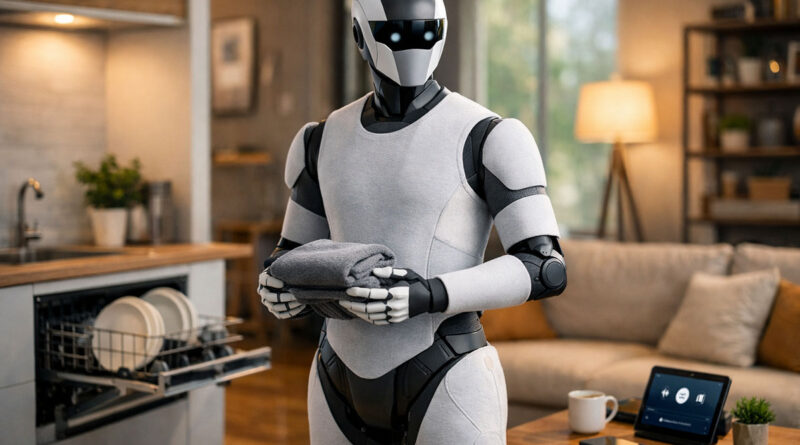
Figure 03 – the revolutionary home robot of the future
Figure 03 – a revolutionary home robot of the future that makes life easier
The history of Figure 03
Robot design and ergonomics
Motion mechanisms and materials
Helix artificial intelligence
Robot operational capabilities
Humanoid integration and social interaction
Applications and relevance to the home
Technical challenges and ethical
Market and availability
Development prospects and the future of home robots
Figure 03 - a revolutionary home robot of the future that makes life easier
Figure 03 is a 173 cm tall, approximately 75 kg humanoid home robot designed by Figure AI to support daily activities in the home environment. The design incorporates 21 degrees of freedom (DOF) in the arms and torso, enabling precise manipulation of objects weighing up to 3 kg with a grip accuracy of ±2 mm. The arms are equipped with electric actuators and Figure AI’s proprietary actuators, while the leg and torso joints are motorized for stable and smooth gait. The robot operates on a lithium-ion battery that provides 6–8 hours of operation and allows automatic docking to a charging station. Figure 03 integrates visual and haptic sensors, including RGB cameras, depth sensors, and force sensors, which work with the Helix architecture—an end-to-end AI system enabling adaptation to new objects and transferring skills between tasks, while requiring higher computational demands than traditional perception-planning-control pipelines.
History of the creation of Figure 03
Figure 03 began development at Figure AI’s labs in response to the growing demand for humanoid home assistants capable of performing tasks beyond the capabilities of traditional cleaning robots or industrial arms. Initial prototypes focused on gait stability, simple object manipulation, and visual sensor integration. Subsequent iterations introduced 21 degrees of freedom in the limbs and torso, which increased gripping precision and the ability to perform parallel tasks. The production version was optimized for battery life and charging station compatibility, enhancing practical usability in the home. In parallel, Helix, a control system based on System 0/1/2, was developed, integrating perception, planning, and task execution autonomously, minimizing the need for human intervention. During the prototype phase, everyday use scenarios were tested in semi-structured environments to determine operational constraints.
Robot Design and Ergonomics
Figure 03 stands 173 cm tall and weighs approximately 75 kg, ensuring stability when manipulating objects. Its 21 degrees of freedom, including 7 in each hand, 3 in the torso, and 4 in the legs, enable precise manual manipulation and dynamic stabilization during walking. The hands are ergonomically designed, with additional force sensors in the fingers for pressure modulation, protecting delicate objects. The lithium-ion battery power system allows for 6–8 hours of operation, with the option of automatic docking. Visual and haptic sensors—RGB cameras, depth sensors, force sensors, and an IMU—work with Helix, enabling the robot to safely and precisely interact with its environment. The humanoid physique and natural movements enhance social acceptance, allowing users to predict the robot’s behavior.
Motion mechanisms and materials
The robot utilizes electromechanical actuators to control every movement of its arms, legs, and torso. Touch sensors in the fingers detect forces with a precision of a few grams, enabling manipulation of delicate objects. The design is based on high-strength materials, minimizing the risk of damage from overload. Soft coatings and pressure limits increase user safety during physical contact.
Helix Artificial Intelligence
Helix is an AI system that integrates computer vision, natural language processing, and machine learning. The robot recognizes objects, people, and situations in real time and responds to voice commands. The system uses multi-lens cameras, distance sensors, and directional microphones to provide a complete view of the workspace. Helix enables adaptive action planning and skill transfer between tasks, allowing the robot to learn new actions through repeated interactions.
Robot Operational Capabilities
Figure 03 can assist users with cooking, carrying items, operating the dishwasher, folding laundry, and monitoring the home environment. The robot navigates autonomously around rooms, avoids obstacles, and plans paths. Demonstrations have demonstrated adaptive learning, although full autonomy in complex scenarios still requires human supervision.
Humanoid Integration and Social Interaction
Its humanoid form facilitates the recognition of user gestures, facial expressions, and intentions, enhancing the effectiveness of human-robot collaboration. Soft coatings and limited movement forces ensure safe physical contact. Figure 03 can act as a visual assistant in a smart home, handing over items, monitoring rooms, and responding to changes in the environment.
Uses and Importance for the Home
The robot takes on routine tasks like carrying objects, preparing simple meals, organizing spaces, supervising children, and supporting seniors. Thanks to its ability to learn and adapt, Figure 03 can perform increasingly complex tasks over time, increasing the comfort and efficiency of home life.
Technical and Ethical Challenges
Key challenges include user safety and data protection. The Helix system processes information from cameras and microphones, requiring a privacy policy. Fail-safe mechanisms, collision sensors, and user monitoring minimize risk in unpredictable situations. Limitations on full autonomy mean that human intervention remains necessary in challenging scenarios.
Market and Availability
Figure 03 is currently in early production. Initial models are aimed at premium and business customers, with planned mass production aimed at broader adoption in home robotics. Compared to cleaning robots or industrial arms, Figure 03 stands out by integrating mobility, precision manipulation, and environmental perception into a single system.
Development prospects and the future of home robots
Figure 03 sets the standard in consumer robotics, integrating mechanics, sensors, and Helix AI into a functional home assistant. Future developments include improved autonomy, precision movements, integration with smart home systems, and extension of functionality into smart homes. Despite current limitations, such as the need for supervision and high price, Figure 03 represents a significant step towards mass adoption of home robots in the coming years.
Bibliography
Figure AI, Wikipedia – Description of Figure 03 as a third-generation humanoid robot with sensors and the AI Helix. https://en.wikipedia.org/wiki/Figure_AI?utm_source=chatgpt.com
FinancialContent – The Domestic Robotics Revolution: Figure AI Unveils Figure 03 – Presentation of the robot’s technical aspects and capabilities. https://www.financialcontent.com/article/tokenring-2026-2-5-the-domestic-robotics-revolution-figure-ai-unveils-figure-03-and-the-helix-unified-brain?utm_source=chatgpt.com
Interia.pl – Figure 03: A robot that looks like a game character – Description of the robot’s demonstration, its functions, and media reactions. https://gry.interia.pl/sprzet/news-figure-03-robot-ktory-wyglada-jak-bohater-gry-ale-zrobi-porz%2CnId%2C22438586?utm_source=chatgpt.com
Aparobot – Figure 03 Robot Details – detailed technical specifications and description of the robot’s components. https://www.aparobot.com/robots/figure-03?utm_source=chatgpt.com
PABLIK.pl – 2026: Figure 03 – the robot that will live with you – information on dimensions, production plans, and estimated price. https://www.pablik.pl/39721/2026-figure-03-robot-ktory-zamieszka-z-toba?utm_source=chatgpt.com
Auraposter.pl – Figure 03: Humanoid Robot for Home and Industry – Discussion of Home and Industrial Applications and Possible Disadvantages. https://auraposter.pl/figure-03-nowy-humanoidny-robot-od-figure-ai-gotowy-do-masowej-produkcji/?utm_source=chatgpt.com