Multimodal transport in Poland 2030
Multimodal Transport in Poland 2030. How Will the Face of Logistics Change?
What is Multimodal Transport?
What Does Multimodality Look Like Today?
The Role of Railways in the System
The Importance of Trucks
Inland Waterway Transport – Potential and Barriers+
Multimodal Terminals – New Logistics Hubs
Main Benefits After 2030 year
Challenges that remain
Multimodal transport in Poland 2030. How will the face of logistics change?
Multimodal transport in Poland combines various modes of transport into a single, logical system. The key is rail, trucks, and water transport, which together could revolutionize logistics in the country by 2030. This strategy not only streamlines the movement of goods but also improves the competitiveness of the Polish economy. How might this work? What are the current achievements in this area, and what challenges lie ahead?
What is multimodal transport
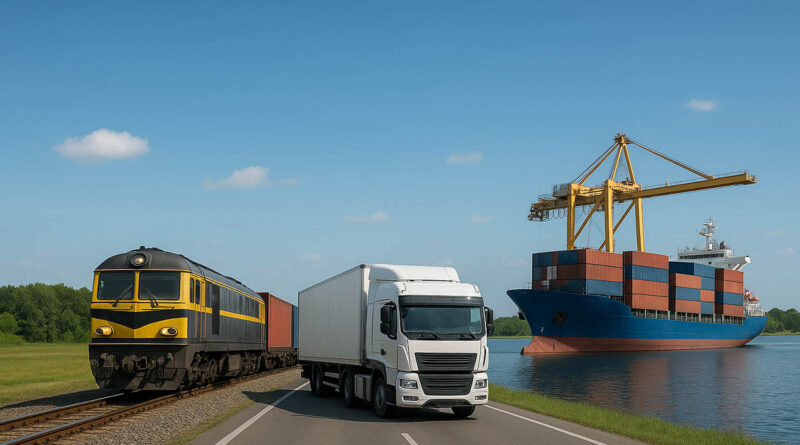
Multimodal transport involves the transport of goods using at least two different modes of transport under a single contract and under the responsibility of a single operator. Goods can therefore travel a long distance by train, then a short distance by truck, or even arrive by ship or inland barge. This helps optimize delivery costs and times and facilitates planning of the entire supply chain.
In practice, multimodal transport in Poland today primarily combines rail and trucks. Inland waterway transport has significant potential, which is only just beginning to be realized.
What does multimodality look like today?
Intermodal transport – a close relative of multimodal – is steadily gaining importance in Polish logistics. In the first quarter of 2025, the share of intermodal transport in rail transport in Poland reached approximately 16.6%, the highest figure on record. Railways transported over 432,000 intermodal units – containers or sets of container sets that do not require reloading of the cargo itself when changing modes of transport.
Statistics show that this market maintains stable volumes and even grows year over year, despite short-term fluctuations.
The role of railways in the system
Rail is a fundamental pillar of long-distance multimodal transport. Its strength lies in its transport efficiency and the ability to transport large volumes of goods over significant distances, more economically and more environmentally friendly than trucks. A larger number of terminals and improved international connections allow rail to be integrated into global supply chains.
Poland’s rail system transports millions of tons of goods annually and has been modernized for years, although it still requires investment in both infrastructure and the digitalization of operations planning.
The Importance of Trucks
Trucks still dominate shorter distances and “last mile” deliveries—places where other modes of transport cannot reach. They transport goods from multimodal terminals to end customers or small manufacturing plants. Their route flexibility and rapid operation make them an essential element of any multimodal model.
In multimodal transport, trucks serve as a link. They transport goods to and from terminals, connect seaports and rail ports with their destinations, and handle deliveries that otherwise cannot be planned sensibly.
Inland waterway transport – potential and barriers
Poland has an extensive network of inland waterways, nearly 3,800 km long, but only a small portion meets the appropriate navigation parameters and is suitable for freight transport.
GUS data indicate that water transport’s share in cargo transport in Poland is currently marginal, almost imperceptible compared to other modes of transport. Nevertheless, water transport has enormous potential if modernized and better integrated with rail and road transport.
In practice, inland waterways can reduce congestion on road networks, reduce emissions, and ensure cost-effective transport of large volumes of cargo. However, integrating rivers and canals into the logistics system requires investment in infrastructure – dredging, regulation, and new transshipment terminals – and changes in transport planning.
Multimodal terminals – new logistics hubs
Multimodal terminals are points where goods are transshipped between different modes of transport. They constitute the heart of the system and enable a smooth transition from rail to road or water transport. The number of such terminals in Poland is growing, and their deployment is expanding to more and more regions of the country, especially those with significant export and import traffic.
Terminals help shorten cargo turnaround times, reduce logistics costs, and increase delivery predictability. Their efficient operation is crucial for the development of multimodal transport.
Main benefits after 2030
- Lower logistics costs – Combining rail, truck, and water transport leverages the strengths of each mode of transport. Rail can handle long distances and large loads, trucks offer flexibility, and waterways can transport bulk goods with low operating costs.
- Higher system efficiency – Multimodality enables better infrastructure utilization, reduces traffic congestion, and improves delivery flow.
- Smaller environmental footprint – Increased use of rail and water transport reduces CO₂ emissions and noise associated with road transport, which aligns with sustainable development goals.
- Greater supply chain resilience – Diversifying transport modes means greater resilience to disruptions, such as road infrastructure failures.
Challenges That Remain
Multimodal transport in Poland faces significant challenges. Infrastructure – particularly waterborne – requires modernization. Terminals must be planned in conjunction with global transport corridors. Integration of planning and digitalization systems is also necessary to ensure that all three modes of transport operate as a single service.
Public aid and investment programs will be needed to accelerate the development of segments that are currently underdeveloped, especially inland waterways.
Multimodal transport in Poland – combining rail, trucks, and waterborne transport – has the real potential to transform logistics by 2030. We are already seeing the growing importance of intermodal transport on rail and the development of terminals. By integrating waterways into efficient logistics chains, we will increase efficiency, reduce costs, and mitigate negative environmental impact. This is not just an idea, but a direction that is gaining increasing importance in transport strategies and investment plans for the coming years.
Bibliography
Central Statistical Office. (2025). Multimodal transport in Poland – statistical data. Warsaw: Central Statistical Office.
Office of Rail Transport. (2025). Report on intermodal transport in Poland in the first quarter of 2025. Warsaw: Office of Rail Transport.
Vervo. (2025). Multimodal transport: definitions and applications in logistics.
Office of Rail Transport Data. (2025). Intermodal transport statistics. Office of Rail Transport, Warsaw.