SwarmFarm Robotics develops autonomous agricultural robots
SwarmFarm Robotics Invests in Development and Expansion
Autonomous SwarmBots Transform Agriculture
Data Confirms Technology’s Effectiveness
Funding Drives Production and Expansion
Farmer-First Philosophy as a Competitive Advantage
Open Ecosystem Supports Innovation
Sustainability and Resource Efficiency
The Future of Autonomy in Agriculture
SwarmFarm Robotics invests in development and expansion
Australian company SwarmFarm Robotics has raised $30 million in a Series B funding round. The investment aims to develop a fleet of autonomous agricultural robots and expand into the North American market. This is a significant step towards realizing the company’s vision of consistently transforming the way farmers run their farms.
European investor Edaphon, Clean Energy Finance Corporation (CEFC), QIC, and Artesian Capital participated in the funding round. CEFC committed $7 million through its Powering Australia Technology Fund.
SwarmFarm Robotics, founded by farmers Andrew and Jocie Bate, develops lightweight, self-driving machines that reduce labor costs, reduce chemical use, and minimize the environmental impact of agricultural operations.
Autonomous SwarmBots are changing agriculture
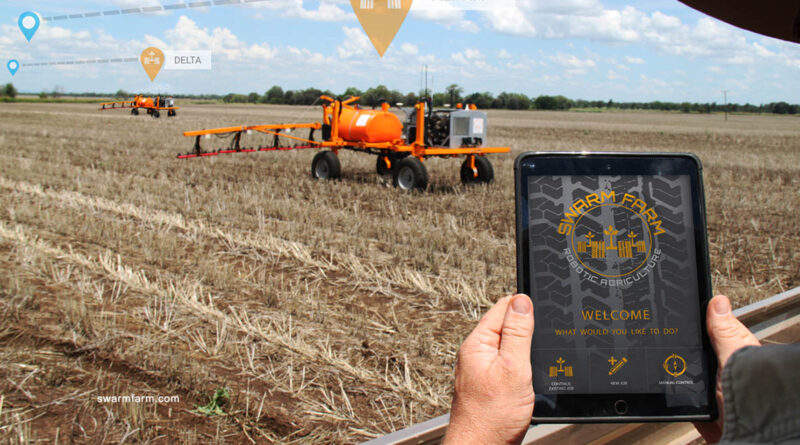
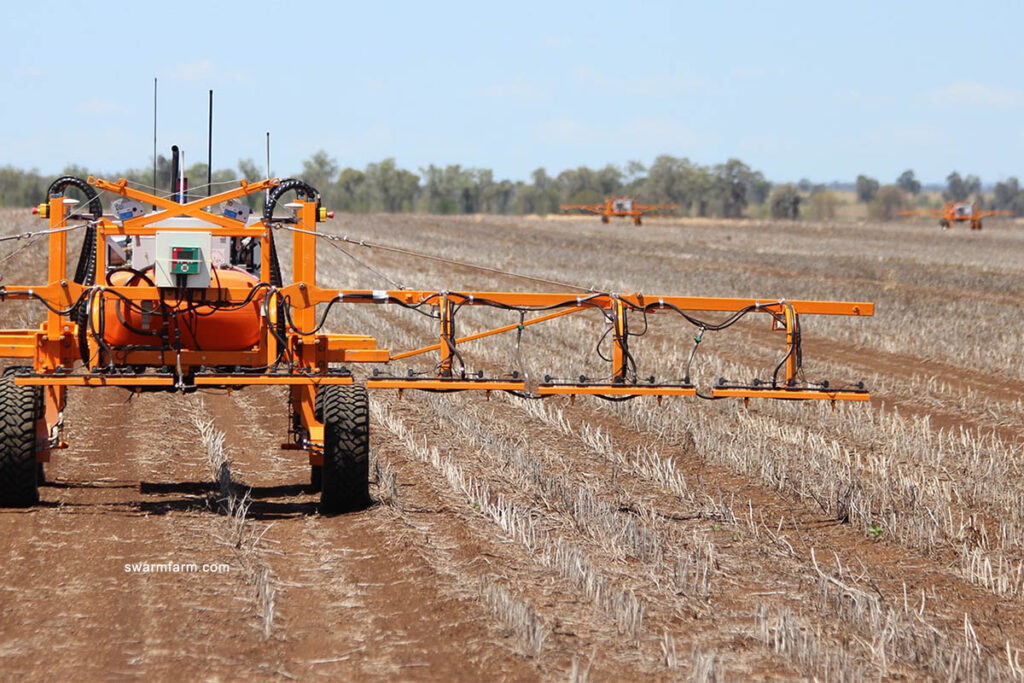
Instead of pursuing ever larger and more expensive machines, SwarmFarm is focusing on smaller, intelligent robots that can work together in organized fleets. Each robot operates autonomously and is easy to operate. This approach allows farmers to increase efficiency without having to invest in expensive equipment.
A key element of the offering is SwarmConnect – an open platform, often compared to an app store for agriculture. Technology partners can develop apps tailored to specific crops and needs, and farmers gain the ability to easily program robots for various tasks, such as spraying, mowing, or clearing.
The result is a dynamic ecosystem that benefits both parties. Farmers gain flexibility and independence, and technology partners gain a direct channel to market. As founder Andrew Bate points out, some partners have even quadrupled their sales using SwarmConnect.
Data confirms the effectiveness of the technology
Results to date demonstrate that the SwarmFarm system is proving effective in practice. The company’s autonomous robots have already logged over 220,000 hours of operation and managed an area exceeding two million hectares. During this time, they have saved millions of liters of chemicals and significantly reduced the need for human labor.
Such data demonstrates that the technology developed by SwarmFarm is not just a technical innovation, but a real tool for increasing farm efficiency and sustainability. Farmers can operate faster, more precisely, and in a more environmentally friendly manner, translating into higher profits and production stability.
Financing drives production and expansion
The new funding will enable the company to increase its production capacity in Toowoomba, expand its team, and intensify its expansion into the North American market. SwarmFarm sees enormous potential in the United States and Canada, both due to the size of the agricultural sector and the growing demand for automation solutions.
Entering this market is crucial to the company’s continued growth. With increased production scale and a global presence, SwarmFarm will be able to innovate faster and strengthen its position as a leader in autonomous agricultural machinery.
Farmer-first philosophy as a competitive advantage
One of the key factors in the company’s success is its farmer-first philosophy, an approach that prioritizes farmers’ needs. Investor Edaphon described SwarmFarm as a “dark horse in the race for autonomy,” emphasizing that this approach is its greatest advantage.
The machines are created by farmers for farmers, so the designers understand the daily challenges faced by users. The simplicity of the design, reliability, and ease of use make the technology accessible even to smaller farms, which often lack the resources for complex automation systems.
Open ecosystem supports the development of innovation
SwarmConnect is an example of an open ecosystem that connects manufacturers, software developers, and end users. This allows for the implementation of new features to be significantly faster than with traditional solutions.
Farmers can customize robot functions to meet their current needs, and software companies can create dedicated applications supporting precision farming. This collaboration drives innovation while maintaining full control over farm processes.
Sustainability and resource efficiency
SwarmFarm Robotics’ autonomous robots support sustainable agriculture. Their precise operation reduces the use of chemicals and fuel. This translates into lower resource consumption and a reduced carbon footprint.
The robots perform tasks precisely where needed, minimizing waste and improving crop quality. In turn, farmers can better plan their operations and optimize energy consumption. In this way, SwarmFarm technology combines economic efficiency with environmental protection, supporting the concept of modern, responsible agriculture.
The Future of Autonomy in Agriculture
SwarmFarm Robotics proves that autonomy in agriculture is not the future, but the present. Its solutions enable increased productivity without losing control, while simultaneously reducing dependence on external factors such as labor availability or fluctuating fuel costs.
The company is consistently developing its technologies and strengthening its position in the global market. With new funding and planned expansion in North America, SwarmFarm has the potential to become one of the leaders in the global agritechnology sector.
SwarmFarm Robotics is an example of how practicality and innovation can go hand in hand. With a $30 million investment, the company is accelerating the development of autonomous agricultural robots and expanding into new markets.
SwarmBot technology and the SwarmConnect platform demonstrate that automation can be accessible, efficient, and environmentally friendly. SwarmFarm demonstrates that the future of agriculture doesn’t have to rely on ever-larger machines, but on intelligent, collaborative robots that help farmers achieve better results every day.