Vertical farming – the green revolution
Vertical farming – a green revolution responding to the challenges of the modern world and the needs of sustainable development
Control of conditions and predictability of yields
Saving resources and reducing the burden on the environment
Urban farms as an element of modern infrastructure
Answer to global food challenges
The future of farming in vertical structures
Vertical farming – a green revolution that responds to the challenges of the modern world and the needs of sustainable development
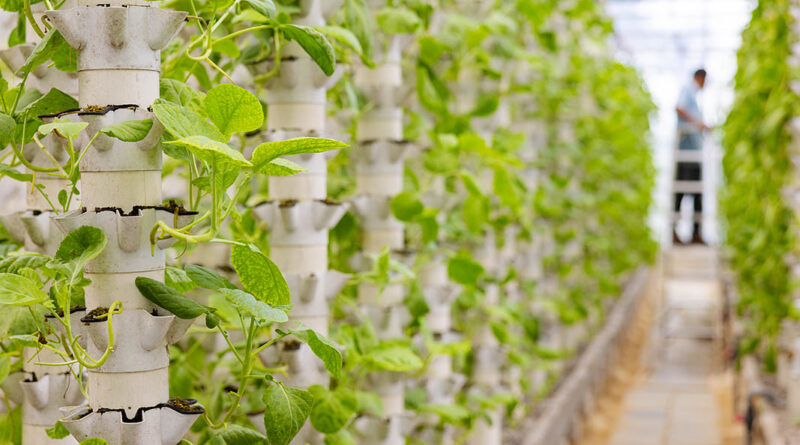
Vertical farming, also known as vertical farming, is becoming one of the most promising directions in agricultural development. This method of food production involves arranging plants in vertical modules, creating multi-story structures. This allows for much more efficient use of space than in traditional farms. Crops are moved indoors, where temperature, humidity, and lighting are easily controlled. This new method is gaining popularity because it addresses the need to create stable and safe food sources in a rapidly changing environment.
Condition control and yield predictability
Vertical farming allows for complete control of the environment in which plants grow. LED lamps provide the appropriate light spectrum, while hydroponic and aeroponic systems introduce nutrients without the need for soil. Maintaining constant temperature and humidity reduces the risk of disease and promotes faster plant development. Yields remain consistent, regardless of weather and seasons. This is crucial in a world where climate change is making traditional crops increasingly unpredictable.
Save resources and reduce environmental impact
One of the greatest advantages of vertical farming is the significant reduction in water consumption. In closed systems, water is circulated repeatedly, minimizing water loss. Plants rarely require pesticides because the conditions are sterile, and the controlled atmosphere inhibits pest development. Vertical farming takes up less space, making it suitable for cities and regions with limited access to agricultural land. This allows for the production of fresh food without the need to occupy large tracts of land. This solution is environmentally friendly, reducing pressure on ecosystems and reducing energy consumption related to transportation.
Urban farms as an element of modern infrastructure
Modern vertical farms are springing up in many metropolises. Former warehouses, abandoned factories, and building rooftops are being transformed into production spaces. Shortening the distance between farm and consumer reduces food waste and ensures vegetables and herbs reach residents faster and in better condition. Local restaurants and shops are increasingly choosing suppliers using vertical farming technology, as they can count on regular deliveries of fresh and healthy produce. In cities, such solutions are becoming part of sustainable development strategies.
Responding to Global Food Challenges
In the face of climate change, soil degradation, and a growing population, it’s becoming increasingly necessary to seek more efficient methods of food production. Vertical farming enables crop cultivation in regions where traditional agriculture is difficult or even impossible. It’s a way to reduce dependence on seasonality and unpredictable weather conditions. Many countries are investing in this technology, seeing it as a tool for increasing food security. Such farms can be scaled and established anywhere, giving them a significant advantage over conventional farms.
The future of agriculture in vertical structures
The growing interest in vertical farming stems from the need to create agriculture that is more efficient, cleaner, and resilient to climate shocks. Vertical farming opens the door to food production in urban environments, reduces dependence on imports, and improves the availability of fresh produce. This technology is transforming the way we think about agriculture and is becoming one of the pillars of the future food economy. This solution, combining innovation with respect for natural resources, has the potential to significantly improve the quality of life in densely populated areas.