Green building in Poland – real savings or ecological marketing?
Green Building in Poland as a Response to Rising Energy Costs
Legal Regulations as a Driver of Change
Investment Costs vs. Operating Costs
Support Programs and Their Importance
Certification and Its Real Value
Examples from Polish Practice
Barriers and Limitations to Development
Conclusions for Investors and Users
Green building in Poland as a response to rising energy costs
Green building in Poland is increasingly featured in public debate, developer proposals, and strategic documents. Rising energy prices, regulatory pressure, and climate change are making the topic less of a niche issue. However, investors are asking a fundamental question: is green building in Poland actually profitable, or is it just an element of eco-marketing?
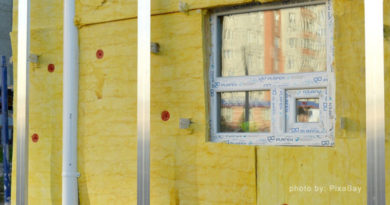
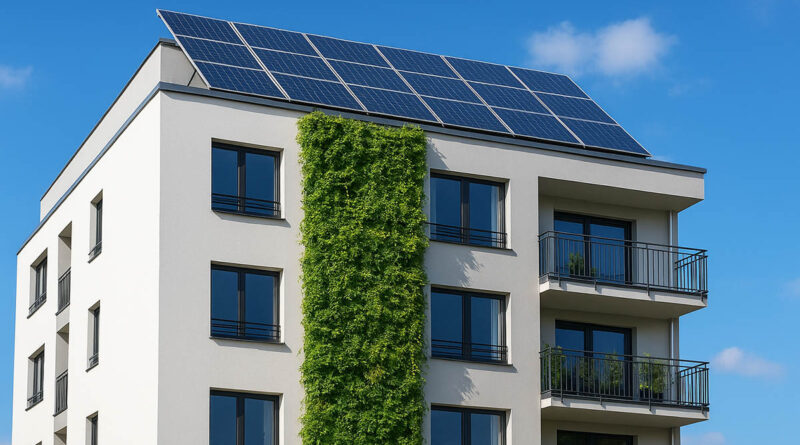
In practice, it’s about how buildings are designed, constructed, and used. Green building reduces the consumption of energy and natural resources while simultaneously improving user comfort. Insulation, airtightness, efficient heating systems, and the use of renewable energy sources are crucial. These elements impact both the environment and the household and business budget.
Legal regulations as a driver of change
The development of green building in Poland is not merely the result of a trend. Legal regulations play a crucial role. Since 2021, the Technical Conditions WT 2021 have been in force, significantly tightening energy performance requirements for new buildings. These regulations stem from the implementation of the EU’s EPBD directive and the concept of nearly zero-energy buildings.
The new regulations compel designers and investors to apply better insulation, reduce thermal bridges, and incorporate renewable energy sources. A building that fails to meet these requirements will not be granted an occupancy permit. As a result, green solutions are no longer a matter of choice but are becoming the standard. This is reshaping the market, while also raising concerns about increased investment costs.
The Technical Conditions WT 2021 are a set of regulations defining the minimum requirements that must be met by new buildings as well as by buildings undergoing major renovations in Poland. These regulations specify, among other things, the permissible level of a building’s energy demand, the required insulation performance of walls, roofs, and windows, and the principles for limiting heat loss. WT 2021 aim to reduce energy consumption in buildings and lower greenhouse gas emissions nationwide.
In turn, the EU Energy Performance of Buildings Directive (EPBD) is a legal act of the European Union that establishes a common framework for improving the energy efficiency of buildings across all Member States. The directive introduces the concept of nearly zero-energy buildings (nZEB) and obliges EU countries to gradually raise energy performance standards. WT 2021 constitute Poland’s response to these requirements and translate the EPBD assumptions into the national legal system.
Investment costs vs. operating costs
The most frequently cited argument against green building is higher initial costs. Indeed, energy-efficient materials, heat pumps, and mechanical ventilation with heat recovery require higher initial capital outlays. The difference in the cost of building a single-family home can range from a few to a dozen or so percent.
However, cost analysis should not end with the construction phase. Green building in Poland is based on an approach that considers the entire life cycle of a building. Lower energy demand means lower heating and electricity bills. Over the next dozen or so years, these savings can offset higher initial costs. With rising energy prices, this effect is becoming increasingly apparent.
Support Programs and Their Importance
Public programs are a crucial element of the economic balance. The “Clean Air” program supports the thermal modernization of existing buildings and the replacement of inefficient heating sources. The National Fund for Environmental Protection and Water Management also offers other instruments targeted at local governments and housing communities.
Thanks to subsidies, investors can significantly reduce the costs of implementing green technologies. In practice, this translates into a shorter payback period. At the same time, these programs require meeting specific technical standards. In this way, the state not only provides financial support but also improves the quality of implemented investments.
Certification and its real value
Green building in Poland is often associated with certifications such as BREEAM or LEED. In the office and commercial sectors, certification has become practically standard. Certified buildings command higher rental rates and enjoy greater tenant interest.
However, certification serves a dual purpose. On the one hand, it serves as a marketing tool. On the other, it enforces specific technical and organizational solutions. The problem arises when certification becomes an end in itself. Excessive focus on formal compliance with criteria can lead to costly solutions that are ineffective from the user’s perspective. Therefore, certification is only worthwhile if it stems from a well-designed energy strategy.
Examples from Polish practice
Experience from the Polish market shows that simple and well-tailored solutions deliver the greatest benefits. Good insulation, airtightness, and efficient mechanical ventilation significantly reduce energy demand. Photovoltaic installations can lower electricity bills, especially in single-family homes.
However, technologies selected without analyzing local conditions prove less cost-effective. Oversized systems or expensive materials with a marginal impact on energy balance extend the payback period. Therefore, green building in Poland requires rationality and decision-making based on data, not trends.
Barriers and constraints to development
Despite progress, green construction in Poland still faces barriers. Higher initial costs discourage some investors. A lack of technical knowledge among some contractors also remains a problem. Construction errors can negate potential savings.
An additional challenge is the volatility of support programs. Regulatory uncertainty complicates long-term investment planning. On the other hand, regulatory and economic pressures are steadily increasing, which supports the widespread adoption of green standards.
Conclusions for investors and users
Green building in Poland is neither a miracle solution to all problems nor merely a marketing ploy. A well-designed and constructed energy-efficient building delivers real savings and improved user comfort. This requires a thorough cost-benefit analysis and the use of available support instruments.
Marketing plays its role, especially in the commercial market. However, ultimately, it’s energy bills and the building’s durability that verify claims. Green building makes sense when it’s backed by real technical quality, not just a “green” narrative.
References
Ministry of Development and Technology – Technical Conditions for Buildings and Their Location (WT 2021)
European Commission – Energy Performance of Buildings Directive (EPBD)
National Fund for Environmental Protection and Water Management – ”Clean Air” Program Documentation
Polish Green Building Council (PLGBC) – Reports and Analyses on Green Building in Poland
Plebankiewicz E., Zima K. et al. – Scientific Articles on the Costs and Benefits of Building Certification, Sustainability (MDPI)