Nanoplastics in the Atlantic – the invisible enemy of the oceans
Nanoplastics in the Atlantic – 27 million tons of threat
What is nanoplastics?
Extreme winter storms are gaining strength
Earth is accelerating – milliseconds shorter in a day
Common denominator – climate change
What should be done?
Responding to threats
Nanoplastics in the Atlantic – 27 million tons of threat
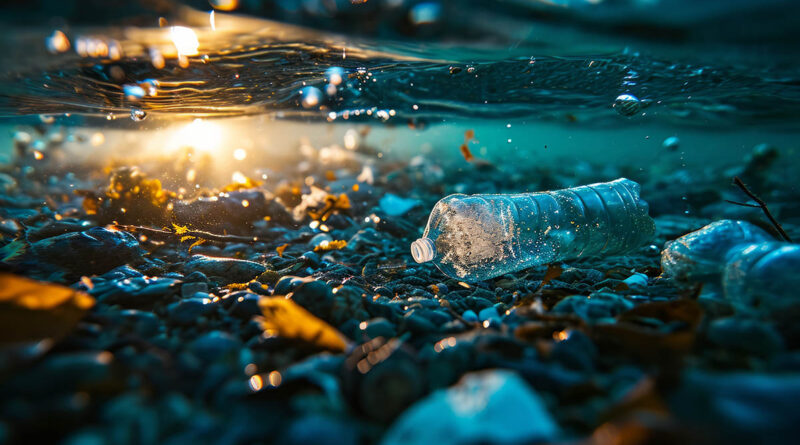
Scientists from the Royal Netherlands Institute for Marine Research (NIOZ) and Utrecht University have announced alarming research findings. Approximately 27 million tons of nanoplastics are floating in the North Atlantic. These particles are smaller than one micrometer. They are primarily formed by the breakdown of larger plastic waste. They are transported by rivers, wind, and rain, eventually ending up in the ocean.
This type of plastic, despite its microscopic size, causes harm on a massive scale. Nanoplastics penetrate marine organisms. They can penetrate the blood-brain barrier, even reaching the human body—including the brain. Cleaning such particles from the ocean proves impossible. Scientists are clear: plastic production must be curbed immediately at the source.
What is nanoplastic?
Nanoplastics are extremely tiny plastic particles, measuring less than one micrometer, or one thousandth of a millimeter. They are primarily formed by the decomposition of larger plastic fragments under the influence of UV radiation, ocean waves, and chemical and mechanical processes occurring in the environment. Due to their microscopic size, nanoplastics are almost invisible to the naked eye, making them difficult to detect and remove from natural ecosystems. However, their environmental impact is significant – these tiny particles can penetrate living organisms, accumulate in the food chain, and even enter human tissues and cells.
Extreme winter storms gaining strength
In parallel with the threats posed by plastic, the intensity of weather phenomena is increasing. Two publications in the prestigious journal PNAS describe a disturbing phenomenon. The strongest winter nor’easter storms in the northeastern United States are becoming approximately 5% more intense than in the mid-20th century. In practice, this translates to a 17% increase in destructive potential.
This phenomenon is linked to the melting of sea ice in the Arctic. The shrinking ice cover is destabilizing the jet stream, resulting in stronger winter storms than before. As a result, residents of the US East Coast must prepare for more frequent and more destructive weather events.
Experts recommend two main actions. First, strengthening infrastructure, especially in coastal areas. Second, reducing greenhouse gas emissions. This is the only way to stop the escalation of extreme weather events.
Earth is accelerating – the day is milliseconds shorter
At the turn of July and August 2025, scientists observed an unusual phenomenon. The day on July 10 was 1.36 milliseconds shorter than the standard 24-hour period. On July 22, it was 1.34 milliseconds shorter. This continues a trend observed since 2020. The Earth is spinning faster.
Several factors are likely responsible for this acceleration. One of these may be changes in the flows in the Earth’s liquid core. Atmospheric influences and the Moon’s gravitational pull are equally possible.
While the differences in the length of the day seem minimal, the consequences could be enormous. If the trend continues, a “negative leap second” could be necessary as early as 2029. This would mean subtracting a second from the day for the first time in history. Such a change would impact the operation of GPS systems, stock exchanges, time synchronization, and computer networks.
Common denominator – climate change
Seemingly separate phenomena—the presence of nanoplastics in the Atlantic, stronger winter storms, and the acceleration of the Earth’s rotation—have a common denominator: climate change and human activity. Melting glaciers, CO₂ emissions, and the overproduction of plastics—all of these are destabilizing natural planetary processes.
Nanoplastics are a consequence of our plastic-based civilization. Intense storms are the result of disruptions to natural weather patterns. Shortening days can be a consequence of mass shifts on Earth and within its interior. One thing they all have in common is that humans have an influence on these shifts.
What should I do?
Action must be decisive and comprehensive, as the scale of the threat grows each year. Scientists are calling primarily for a reduction in plastic production, with a particular emphasis on single-use plastics, which are most easily released into the environment. Specific legal regulations regarding plastic emissions and trade are also needed, both nationally and internationally. Implementing new technologies that will enable monitoring the presence of nanoplastics in the oceans and their spread through the food chain is also becoming crucial. In the context of increasingly severe storms, strengthening infrastructure in regions prone to extreme weather events is essential. At the same time, all possible steps must be taken to reduce greenhouse gas emissions, which destabilize the climate. Technological systems—such as computer networks, GPS systems, and stock exchange systems—must also be prepared for the possibility of a negative leap second, which may become necessary in just a few years.
Threat Response
Nanoplastics in the Atlantic have reached a scale unimaginable – 27 million tons of particles invisible to the naked eye. At the same time, storms on the US East Coast have become more destructive, and the Earth’s rotation is accelerating, shortening the length of a day.
All of these phenomena are alarming. The environment, climate, and even the way we measure time are undergoing dynamic changes. Nanoplastics in the ocean are an irreversible problem – they cannot be removed from the water because their particles are too small to be effectively detected. The intensification of winter storms poses an increasingly real threat to millions of people, infrastructure, and local economies, which could be affected by increasingly severe atmospheric phenomena. The Earth’s accelerating rotation, in turn, challenges technological systems that require extreme precision in time synchronization – such as GPS navigation, stock markets, and satellite communications. Each of these processes is evidence that the planet is responding to the pressures we, as a civilization, are exerting on it. We need thoughtful, global action—not only for the good of the environment, but also for the safety and stability of our everyday lives. If we don’t act now, the consequences will become increasingly difficult to manage.