
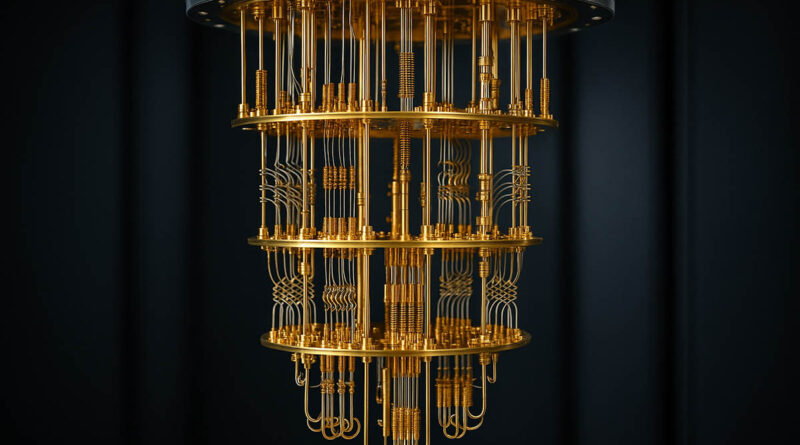
A breakthrough in quantum computing opens a new era of technology.
Breakthrough in quantum computing opens a new era of technology
How quantum computers work and why it’s so difficult
Innovative Harvard project solves the atom loss problem
A two-hour experiment is just the beginning
Why a breakthrough in quantum computing is so important
The path to widespread use of quantum computers
A clear plan and enormous potential
Quantum computers getting closer to reality
Breakthrough in quantum computing opens a new era of technology
A team of physicists from Harvard and MIT announced a breakthrough in quantum computing. The researchers built a device that ran continuously for over two hours—the longest quantum computing time ever. While two hours may seem short compared to traditional computers that can run for months, in the quantum world it’s a technological breakthrough. Previous quantum machines have operated for just a few milliseconds, with record-breaking examples lasting just over ten seconds. The new system maintained stability for two hours, paving the way for quantum computers that run forever.
How quantum computers work and why it's so difficult
Quantum computers use qubits, or subatomic particles, to store and process data. Qubits can exist in a superposition state, representing both 0 and 1 simultaneously, allowing for parallel computation. However, this technological advantage comes at a price—qubits are sensitive to external disturbances. A costly loss of an atom can result in data loss and system failure. This problem, known as atom loss, has long hindered the development of practical quantum computers.
Innovative Harvard Project Solves Atom Loss Problem
Scientists from Harvard and MIT have developed a system that replaces lost qubits in real time. Key technologies include an optical lattice conveyor belt and optical tweezers. The system feeds up to 300,000 atoms per second into a quantum computer, with a total of 3,000 qubits. This allows the device to operate continuously, and lost data is immediately replaced. As Tout T. Wang, a researcher at Harvard, emphasizes, there are currently no fundamental limits to the lifespan of quantum computers. “Even if atoms disappear with a small probability, we can introduce new ones without disturbing the quantum information stored in the system,” says Wang.
The two-hour experiment is just the beginning
Achieving two hours of stable operation is just the beginning. The experiment has proven that it’s possible to significantly extend the operating time of a quantum computer. According to the team of scientists, quantum computers capable of unlimited operation could be developed within three years. Until recently, such a breakthrough was predicted to take half a decade or longer. Innovations from Harvard are accelerating this process.
Why the quantum computing breakthrough is so important
Quantum computers have the potential to revolutionize technology. They can break advanced cryptographic codes, simulate chemical reactions at the atomic level, and create new drugs and financial models. Their applications are virtually limitless. In medicine, they will accelerate research into gene therapies, and in finance, they will enable real-time market analysis. In artificial intelligence, they will enable the development of advanced machine learning models.
The road to widespread use of quantum computers
Despite advances, quantum computers won’t be available in homes anytime soon. The devices are expensive and require extreme operating conditions, including very low temperatures. For the next decade, they will remain the domain of laboratories and research institutions. However, each new experiment, like the one at Harvard, brings quantum technology closer to becoming a part of everyday life.
Clear plan and huge potential
The experiment has allowed scientists to develop a clear roadmap for quantum computing. They know what steps to take to scale up the system and extend its runtime. Much work remains ahead: perfecting the exchange of atoms and protecting quantum data from interference. Nevertheless, the mood is optimistic—quantum technology could soon change the world forever.
Quantum computers getting closer to reality
The Harvard breakthrough is evidence of the rapid advancement of technology. Just a few years ago, a two-hour runtime of a quantum computer seemed impossible. Today, the limits of human capabilities are pushing ever further. Although quantum computers won’t be available in homes for the next decade, they will become the foundation of a global computing infrastructure. The future of computing begins today—and it’s quantum.
The Harvard and MIT experiment is a milestone in the history of quantum technology. The two-hour stable computer runtime proves that barriers can be broken through innovation and the courage of scientists. The breakthrough in quantum computing opens the door to a future where computers operate without interruptions or limitations—a vision once considered science fiction, now increasingly closer to reality.