Butter with CO₂ – a revolution in fats that could change the world of food
Butter from CO₂ – a revolution in fats that could change the world of food
Butter from CO₂ – how fat is made from air
Taste, chemistry, and consumer acceptance
Environmental benefits and greenhouse gas emissions
Industrial potential and production scale
Technological and regulatory challenges
Nutritional values of butter from CO₂
Prospects for the future of food
Butter with CO₂ - a revolution in fats that could change the world of food
Butter from CO₂ is one of the most intriguing innovations in industrial fat production in recent years. This “air butter” is produced without the use of cows, plants, or traditional breeding, yet it resembles the taste and consistency of traditional butter. This article explores the scientific basis of this technology, describes its environmental potential, and discusses the challenges it poses.
Butter from CO₂ – how fat is created from air
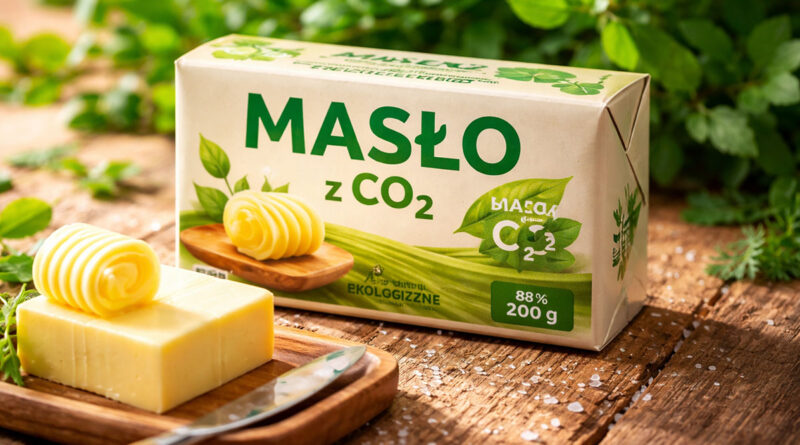
CO₂ butter is created through a process that differs fundamentally from traditional butter production from cream. Savor, the company behind this project, uses carbon dioxide (CO₂) extracted directly from air or other sources as a raw material. Hydrogen extracted from water is added, and then, under controlled conditions, high temperatures and oxidation are used to obtain hydrocarbon chains—the same ones that make up edible fats. This process does not require the biological breeding of plants or animals, and its chemical result is identical to natural fats.
After obtaining the base fat, Savor combines it with water, an emulsifier (e.g., lecithin), and natural flavorings and coloring agents such as beta-carotene or vegetable oils. The result is a product that, in terms of taste, color, and culinary functionality, closely resembles traditionally produced butter.
Taste, Chemistry, and Consumer Acceptance
While the idea of butter made from CO₂ sounds like science fiction, initial taste tests and tasting panels suggest that this product may surprise even skeptics. According to reports from investors and experts, those who tried this butter couldn’t tell the difference from regular milk fat. Bill Gates, who invested in the project, admitted that he “couldn’t believe it wasn’t real butter” when he ate it on a sandwich.
The key is that fats are the same at the molecular level—they consist of chains of carbon, hydrogen, and oxygen, just like animal or plant fats. This means the human body treats them similarly to other fats, making them a valuable source of energy.
Environmental benefits and greenhouse gas emissions
One of the strongest arguments for CO₂ butter is its environmental potential. Traditional animal husbandry—particularly dairy cattle—is the source of a significant portion of global greenhouse gas emissions, water, agricultural land, and energy. Current data indicates that butter production has a significant carbon footprint and is resource-intensive.
In contrast, butter produced from CO₂ can have an exceptionally low carbon footprint. According to comparative analyses, the emissions associated with its production can be significantly lower than those of traditional fats. For Savor, emissions can be less than 0.8 g CO₂ equivalent per kilogram of fat, while traditional butter has a climate footprint of tens of kilograms of CO₂ per kilogram of product.
Additionally, this process uses significantly less water and requires no agricultural land. The lack of crop or animal husbandry means there’s no need to use fertilizers, agricultural machinery, or large amounts of energy to heat barns and store raw materials.
Industrial potential and production scale
Savor and its research partners emphasize that the technology has the potential to be scalable and competitive with traditional methods. It enables the production of not only butter from CO₂ but also other fats – from the types used in ice cream and mayonnaise to oils and cheeses.
Commercial food products are also planned for release in the coming years – for example, companies collaborating with Savor plan to introduce chocolates made from this type of fat for the 2025 holiday season.
Technological and Regulatory Challenges
Despite promising results, CO₂ butter faces several significant challenges. One of the most important is obtaining full approval from relevant regulatory bodies, such as the FDA in the US and EFSA in the European Union. Synthetic products, although chemically identical to traditional ones, must undergo special food safety assessments before they can be widely sold.
Another challenge is the cost of production. Current technologies for producing air fats are more expensive than traditional methods. However, with technological advancements and increased production scale, costs can decrease, which could ultimately make such foods competitive.
Another factor is consumer acceptance. Not every consumer will automatically accept food created in a laboratory, even if it tastes similar to the traditional product. Education and transparency in communication will be key here.
Nutritional values of butter with CO₂
Nutritionally, CO₂ butter functions like conventional edible fat because it consists of the same chemical compounds—triglycerides made up of fatty acids. The human body does not distinguish the source of fat; it responds to its molecular structure. Therefore, fats synthesized from CO₂ are metabolized in the same way as animal or plant fats. CO₂ butter provides energy in a comparable amount, approximately 9 kcal per gram of fat. Unlike traditional butter, however, it does not naturally contain fat-soluble vitamins such as vitamin A or D, since it is not derived from milk. Manufacturers can, however, precisely fortify the product with these nutrients, allowing control over their quantity and quality.
A significant feature of CO₂ butter is the ability to design the fatty acid profile, including reducing saturated fat content and completely eliminating trans fats. The product contains no lactose, milk proteins, or cholesterol, making it potentially suitable for people with lactose intolerance, milk protein allergies, and for consumers seeking fats with a more predictable nutritional composition.
Prospects for the Future of Food
Butter from CO₂ may be just the beginning of a larger transformation. The technology of synthetically producing fats and other food ingredients opens the door to a world where food is not solely dependent on agricultural land or animal husbandry. If these processes are optimized and adopted by the market, they could help mitigate the effects of climate change, reduce pressure on natural resources, and revolutionize the food industry.
Bibliography
Butter from CO2. Bill Gates himself tried it, Tech.wp.pl.
Savor CEO: Crafting animal-free butter from carbon to “bypass” conventional agriculture, Food Ingredients First.
Lab-Made Butter Created from CO2 Tastes Like the Real Thing, IFLScience.
This Non-Dairy Butter Is Made from CO2 and Can Help Save the Planet, Chowhound.
Butter Made from CO2. Bill Gates’ Startup Revolution, Onet Zielony.
Butter from Air Instead of Cows?, ŚwiatOZE.pl.
Butter Made from CO2, Not Cows, Claims Startup, ProDairy.
IFLScience – “Lab-Made Butter Created from CO₂ Tastes Like the Real Thing”