
10 Breakthrough Technologies from MIT Technology Review 2026 That Are Changing the World
10 Breakthrough Technologies from MIT Technology Review 2026 at the Center of Global Innovation
Hyperscale AI Data Centers as the Foundation of a New Digital Economy
Sodium-ion Batteries Address Lithium Limitations
Next-Generation Nuclear Energy in the Decarbonization Process
Generative Programming as a Paradigm Shift in Software Development
AI Companions and New Dimensions of Human-Technology Interaction
Base-Editing Gene Therapies as the Beginning of Medicine Ultra-Personalized
Gene Resurrection as a New Tool in Synthetic Biology
Commercial Orbital Stations as the Next Stage of the Space Economy
Mechanistic Interpretability as the Key to Trust in AI
Embryo Assessment and New Frontiers in Reproductive Medicine
10 Breakthrough Technologies MIT Technology Review 2026 at the Center of Global Innovation
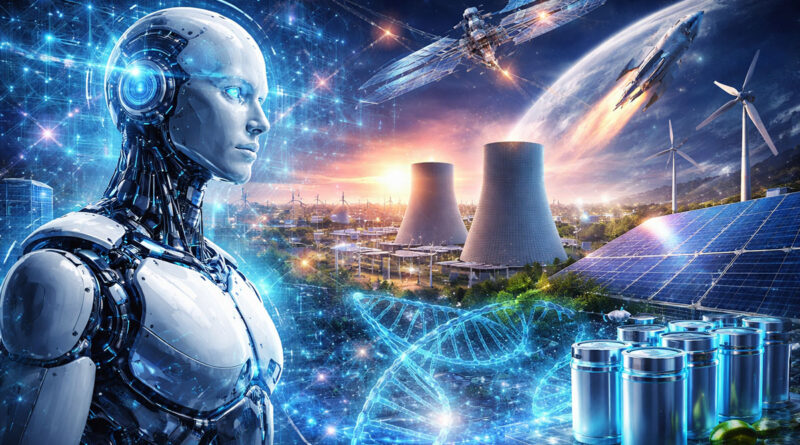
The MIT Technology Review 2026 list of 10 breakthrough technologies is one of the most influential reviews of the development directions of contemporary science and the technology industry. The editorial team analyzes solutions that not only demonstrate a high level of innovation but, above all, have the potential to have a real impact on the economy, health, digital infrastructure, and energy systems. This year’s list clearly demonstrates that technological progress is accelerating simultaneously in the areas of artificial intelligence, biotechnology, nuclear energy, and the space industry, and the boundaries between these sectors are beginning to blur.
Hyperscale AI Data Centers as the Foundation for the New Digital Economy
Hyperscale data centers designed with artificial intelligence in mind are becoming a key infrastructure for today’s digital transformation. Their task is to support the training and execution of models with a vast number of parameters, requiring parallel data processing on an unprecedented scale. Such facilities integrate thousands of specialized computing systems, enabling tasks ranging from medical image analysis to scientific simulations and next-generation language systems. At the same time, these centers consume enormous amounts of energy, so their development is strongly linked to investments in energy efficiency, new cooling methods, and access to stable, low-emission power sources. In practice, this means that the development of AI directly impacts the energy sector and infrastructure planning.
Sodium-ion batteries address lithium limitations
Sodium-ion battery technology is gaining importance as an alternative to lithium-ion systems, which dominate electromobility and energy storage. Sodium is a much more geographically accessible and cheaper raw material, reducing the risks associated with the concentration of lithium supply chains. Sodium batteries are characterized by favorable temperature properties and greater chemical stability, which can increase operational safety in stationary applications. Their role is growing, particularly in the context of storing energy from renewable sources, where scalability and system cost are key, not maximum energy density.
New generation of nuclear energy in the decarbonization process
Next-generation nuclear reactors are designed to improve safety, shorten construction time, and increase application flexibility. They utilize advanced materials, passive safety systems, and a modular design, enabling gradual power expansion. In the context of global decarbonization, they provide a stable baseload energy source that can complement intermittent renewable sources. This technology is also growing in importance as the energy demands of AI data centers and high-tech industries continue to grow, and power systems require a predictable power supply.
Generative Programming as a Paradigm Shift in Software Development
Generative AI systems are beginning to actively participate in the code creation process, analyzing requirements and proposing complete programming solutions. These tools shorten development time, support testing, and automate repetitive tasks, increasing team productivity. At the same time, the role of the programmer is changing, with the programmer increasingly serving as an architect and quality checker of generated solutions. This shift in competences requires a new approach to software security control and accountability for decisions made by AI systems.
AI Companions and New Dimensions of Human-Technology Interaction
Systems known as AI companions are transcending the boundaries of traditional digital assistants and are beginning to function as tools for social interaction. They can conduct long-term dialogues, adapt their communication style, and respond to the user’s emotional signals. They are finding applications in education, psychological support, and senior care. At the same time, their development is sparking debate regarding their impact on social relationships, data privacy, and the limits of technological anthropomorphization.
Base-editing gene therapies as the beginning of ultra-personalized medicine
Single-base editing techniques enable the introduction of precise genetic changes without the need to cut the double helix. This approach increases accuracy and reduces the risk of side effects. Therapies designed for individual patients demonstrate that treating diseases previously considered incurable is becoming possible. However, cost, scalability, and the need to create a regulatory framework for individually designed therapies remain a challenge.
Gene resurrection as a new tool of synthetic biology
Research on ancient DNA and the analysis of extinct organism genes provides insight into mechanisms of biological adaptation and resistance. Although complete species recovery is still a long way off, the sequences identified can inspire new solutions in medicine, agriculture, and environmental protection. This field combines genetics, bioinformatics, and synthetic biology in projects with significant application potential.
Commercial orbital stations as the next stage of the space economy
Private space stations are expected to take over some of the functions previously performed by government agencies. They will be used for materials research, biological experiments, and technology testing in microgravity. This paves the way for the emergence of a new sector of orbital services and accelerates the commercialization of space.
Mechanistic Interpretability as the Key to Trust in AI
Research into the inner workings of AI models aims to understand how neural networks make decisions. This is a crucial step toward building more transparent, secure, and compliant systems. Interpretability increases the ability to detect biases, errors, and potential threats resulting from uncontrolled model behavior.
Embryo Assessment and New Frontiers in Reproductive Medicine
Advanced techniques for analyzing embryo genomes enable the assessment of the risk of genetic diseases before implantation. This technology expands the capabilities of reproductive medicine, but also raises questions about the ethics of trait selection and the social consequences of widespread access to such tools.
The MIT Technology Review 2026 list of 10 breakthrough technologies demonstrates that technological development today is systemic. Advances in AI are impacting the energy sector, biotechnology is transforming medicine, and the space sector is undergoing commercialization. These areas are mutually reinforcing and together define the direction of economic transformation in the coming decades.
Bibliography
MIT Technology Review – 10 Breakthrough Technologies 2026, PR Newswire, January 12, 2026, https://www.prnewswire.com/news-releases/mit-technology-review-announces-the-2026-list-of-10-breakthrough-technologies-302658798.html
MIT’s Top-10 Technologies: Closer to Ohio Than You May Think, KJK, January 23, 2026, https://kjk.com/2026/01/23/mits-top-10-technologies-closer-to-ohio-than-you-may-think/

