Artificial intelligence in industry
Artificial Intelligence in Industry – How AI is Changing Industry 4.0 and Decision-Making
How Artificial Intelligence Works in Industry and What Technologies Support It
AI Applications in Industry – Specific Implementations and Business Effects
Benefits, Challenges, and the Future of AI in Industry
Artificial Intelligence in Industry - How AI is Changing Industry 4.0 and Decision-Making
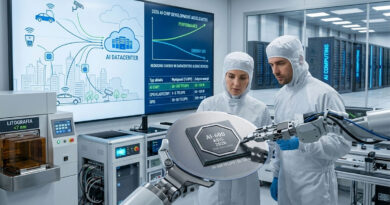
Artificial intelligence in industry is a key pillar of digital transformation, redefining decision-making and operational process management. Companies are increasingly moving away from the traditional model based on historical data and experience in favor of systems that analyze massive data sets in real time and generate recommendations based on advanced algorithms. As a result, organizations are increasing efficiency, reducing costs, and improving the quality of production processes.
The development of artificial intelligence aligns directly with the concept of Industry 4.0, which involves the integration of digital systems with physical industrial processes. AI collaborates with technologies such as the Internet of Things, big data analysis, and cloud computing, creating an environment where data flows continuously and decisions are made based on the current operational situation. According to McKinsey analyses, the use of AI in manufacturing can increase productivity by as much as 10-20% and significantly reduce operational downtime, which directly translates into companies’ financial results.
How artificial intelligence works in industry and what technologies support it
Industrial AI relies on the use of machine learning algorithms and data analysis to identify patterns and predict future events. AI systems analyze data from sensors, production systems, and management platforms, then create predictive models that allow them to predict the behavior of machines and processes.
In practice, this means that AI can predict equipment failures, optimize production parameters, and analyze product quality in real time. According to a McKinsey report on predictive maintenance, the use of AI can reduce maintenance costs by as much as 10–40% and reduce unplanned downtime by 30–50%. These results make AI one of the most important tools in industrial operations management.
Technologically, AI operates through integration with ERP, MES, and SCADA systems, which provide operational and contextual data. Cloud infrastructure and edge computing also play a significant role, enabling rapid information processing. As technology develops, AI systems are becoming more and more autonomous, which means they not only analyze data but also make decisions in real time.
AI Applications in Industry - Specific Implementations and Business Effects
The application of AI in industry encompasses a wide range of activities, but is most significant in production optimization, maintenance, and supply chain management. In the production environment, AI analyzes data from machines and operating systems, allowing for the identification of bottlenecks and process optimization.
One example is Siemens, which uses AI in its industrial solutions to analyze production data and optimize processes. By using AI, the company shortens the implementation time of new solutions and increases production efficiency. General Electric, in turn, uses AI to analyze data from turbines and other industrial equipment, allowing for the prediction of failures and the advance planning of maintenance activities.
In logistics, AI enables the analysis of transportation and demand data, which allows for the optimization of supply chains and reduction of operating costs. According to industry reports, companies using AI in logistics can significantly improve the accuracy of demand forecasts and shorten order fulfillment times.
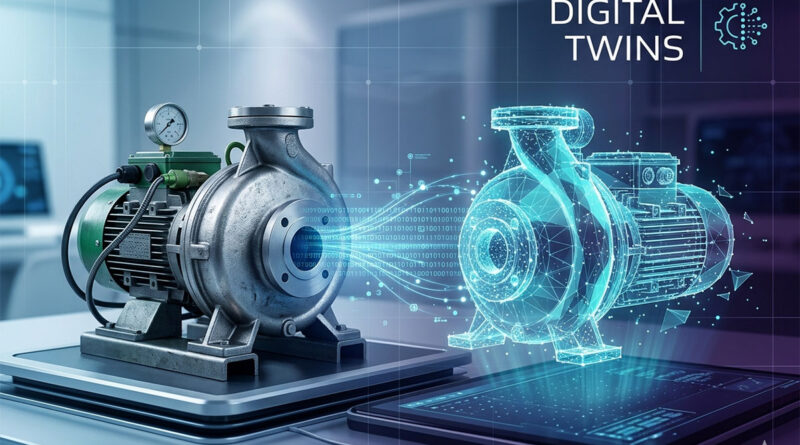
The integration of AI with digital twins is also a significant trend. The digital model provides data and simulations, while AI analyzes them and translates them into operational decisions. This combination allows us to achieve a higher level of automation and create systems capable of independent process optimization.
Benefits, Challenges, and the Future of AI in Industry
Artificial intelligence in industry brings numerous benefits, including increased operational efficiency, cost reduction, and improved product quality. AI systems enable faster decision-making and better use of data, which translates into increased competitiveness for enterprises. At the same time, the technology supports the development of predictive maintenance, which reduces downtime and increases system reliability.
However, AI implementation presents significant challenges. Organizations must invest in technological infrastructure and develop employee competencies. Data quality is also crucial, as algorithms learn from data. Incorrect data can lead to erroneous decisions, which poses a significant operational risk. Furthermore, companies must consider security and transparency in the operation of AI systems.
According to Gartner analyses, the development of AI in industry will accelerate with the increasing availability of data and technological advancements. In the future, AI systems will become increasingly autonomous and capable of making decisions on their own. IBM points out that organizations that effectively implement AI will be able to significantly increase their efficiency and operational flexibility. Artificial intelligence is becoming one of the foundations of modern industry, defining the way businesses operate in the era of the digital economy.
photography
IBM – What is artificial intelligence?
https://www.ibm.com/topics/artificial-intelligence
McKinsey & Company – What is Industry 4.0?
https://www.mckinsey.com/featured-insights/mckinsey-explainers/what-are-industry-4-0-the-fourth-industrial-revolution-and-4ir
McKinsey & Company – The rise of the digital twin
https://www.mckinsey.com/capabilities/tech-and-ai/our-insights/digital-twins-how-to-build-the-first-twin
Gartner – Artificial Intelligence (AI) Glossary
https://www.gartner.com/en/information-technology
IEEE Xplore – Industrial AI: Applications with Sustainable Performance
https://ieeexplore.ieee.org/document/8240462
General Electric – What is Industrial AI?
https://www.ge.com/digital/blog/what-industrial-ai