Modern technologies in agriculture
Modern Technologies in Agriculture – How Innovations Are Changing the Modern Farm
Precision Agriculture – Efficiency and Sustainability
Internet of Things and Artificial Intelligence – Data at the Center of Production
Robotics and Automation – Machines Supporting Production
Challenges of Technology Implementation and Their Future
Modern technologies in agriculture - how innovations change the modern farm
Modern agricultural technologies are not just another trend, but a fundamental shift in the way agricultural production is conducted. From precision tools to artificial intelligence-based systems, these technologies are becoming a central element in building efficient, sustainable, and climate-resilient farms. Thanks to them, farmers in many countries are achieving higher efficiency, optimizing resource use, and making better data-driven decisions. This article provides a detailed overview of the most important innovations and their impact on agriculture, presenting both the benefits and challenges associated with their implementation.
Precision Agriculture - Efficiency and Sustainability
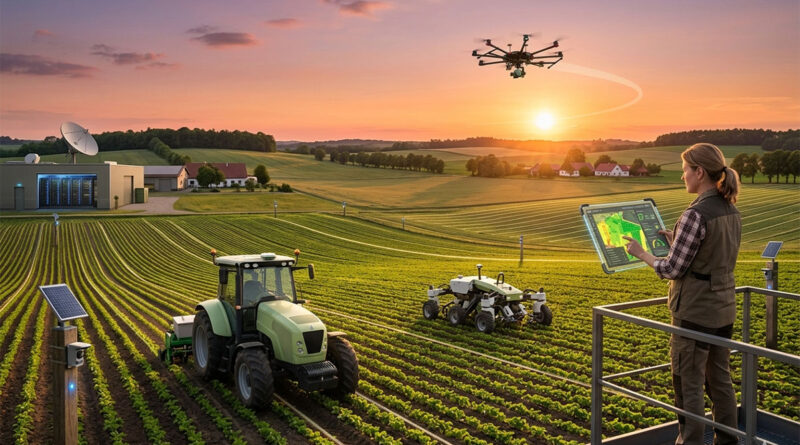
Precision agriculture is an approach that utilizes advanced technologies to collect and analyze data on environmental conditions, soil condition, and plant health. This allows farmers to more precisely plan activities such as fertilization, irrigation, and pest control, adapting them to the actual needs of crops in specific areas of the field. It relies on the use of devices such as GPS, soil sensors, drones, and monitoring systems. This technology not only increases yields but also reduces input consumption and the environmental impact of production.
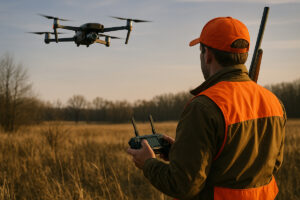
GPS systems enable precise guidance of agricultural machinery, reducing fuel consumption and operational errors. Soil sensors provide real-time data on soil moisture and nutrient levels, allowing for appropriate adjustments to fertilization and irrigation without losses due to excess or deficiency. Drones equipped with multispectral cameras enable precise aerial scanning of crops, helping to early detect areas of water stress, plant diseases, or nutrient deficiencies. Such technologies support data-driven agronomic decisions, which directly impact production efficiency.
Today, we face an agriculture that, through the use of precision systems, can increase farm efficiency by up to several dozen percent while minimizing negative environmental impact. These tools give farmers the ability to observe and respond to crop needs with unprecedented accuracy, which is especially important in changing climatic conditions.
Internet of Things and Artificial Intelligence – Data at the Center of Production
Another pillar of modern agriculture is technologies based on the Internet of Things (IoT) and artificial intelligence (AI). IoT encompasses a network of connected devices and sensors that automatically collect data on soil and climate conditions, and plant health. This information is transmitted to analytical systems, which enable farmers to make decisions based on actual measurements, not just intuition or general guidelines. In practice, these systems support, among other things, irrigation optimization, fertilizer dose adjustments, and better disease risk prediction. ([turn0search1]; [turn0search5])
Combining IoT with AI significantly enhances the analytical capabilities of such systems. AI algorithms enable processing of vast amounts of data and drawing conclusions that help predict the optimal timing of agricultural operations, such as sowing, spraying, or fertilization. Artificial intelligence systems can analyze data from multiple sensors and compare them with historical models and weather forecasts, enabling more accurate production planning.
An example of AI application is the automatic optimization of irrigation schedules based on soil moisture sensors and weather forecasts. Such solutions can reduce water consumption while maintaining or increasing yields, which is crucial in times of increasing water availability. Integrating IoT and AI data also supports plant health monitoring and early disease detection through the analysis of images generated by drones or stationary cameras.
Modern IoT and AI-based solutions not only impact production efficiency, but can also support digital farm management systems that integrate data from various sources and present it transparently on interactive dashboards. This gives farmers complete visibility into their farms and allows them to quickly respond to changes, improving both production planning and control.
Robotics and automation – machines supporting production
Robotics and automation are other key areas of modern agricultural technology. Agricultural robots and autonomous machines are becoming increasingly advanced and accessible, giving farmers the ability to perform advanced operations without the need for extensive human resources. Automated systems can perform tasks such as sowing, weeding, spraying, and harvesting with high precision and efficiency.
Agricultural robots are designed to perform routine, repetitive tasks, which not only saves time and resources but also increases operational accuracy. Autonomous machines can operate independently in the field, using sensors and AI algorithms to adapt their operations to changing conditions. This allows farmers to focus on strategic tasks while robots perform the heavier physical labor.
Agricultural robotics also has the potential to support farmers in situations of labor shortages, a significant problem in many regions of the world. Automated systems can significantly reduce reliance on seasonal labor and accelerate field work, which impacts harvest time and crop quality.
Technology implementation challenges and their future
Despite the many benefits associated with implementing modern agricultural technologies, there are also specific challenges. One of the greatest is the high initial investment cost. Purchasing IoT sensors, autonomous machines, or advanced analytical software can be a barrier for smaller farms. Furthermore, operating these tools often requires specialized knowledge, which can pose a further limitation for agricultural producers.
Another significant challenge is access to high-speed internet in rural areas, which is crucial for the effective operation of IoT systems and real-time data analysis. Without stable connectivity, many technological solutions cannot function at their full potential, limiting their application, especially in more remote regions.
Legal and data security issues also pose challenges. Systems that utilize AI and the cloud for data processing require appropriate privacy protection mechanisms and control over who has access to farm data. In many countries, regulations regarding agronomic data are still developing, which may impact the pace of implementation of new technologies.
Looking ahead, however, agricultural technologies have enormous potential to become a standard in global food production. Over time, the costs of implementing them may decrease, and educational and infrastructure support may facilitate their adoption by smaller farms as well. This technological trend in agriculture is consistent with the broader pursuit of sustainable development and global food security.
References:
- Mrutyunjay Padhiary, Avinash Kumar, Laxmi Narayan Sethi, Emerging technologies for smart and sustainable precision agriculture, Discover Robotics, July 11, 2025;
- Tymoteusz Miller et al., The IoT and AI in Agriculture: The Time Is Now – A Systematic Review of Smart Sensing Technologies, MDPI Sensors, June 6, 2025;
- A comprehensive review on technological breakthroughs in precision agriculture: IoT and emerging data analytics, European Journal of Agronomy, February 2025;
- Modern technologies in agriculture – innovations worth knowing, Centrum Rolnictwa, March 2, 2025;
- IoT technologies in precision agriculture, Rolnictwo Polskie, July 2024;
- Simona Casini et al., Artificial Intelligence in Agri-Robotics, MDPI Robotics, January 15, 2026.